“No Data Left Behind”: Dot-to-Dot Verification of OVC Client Files
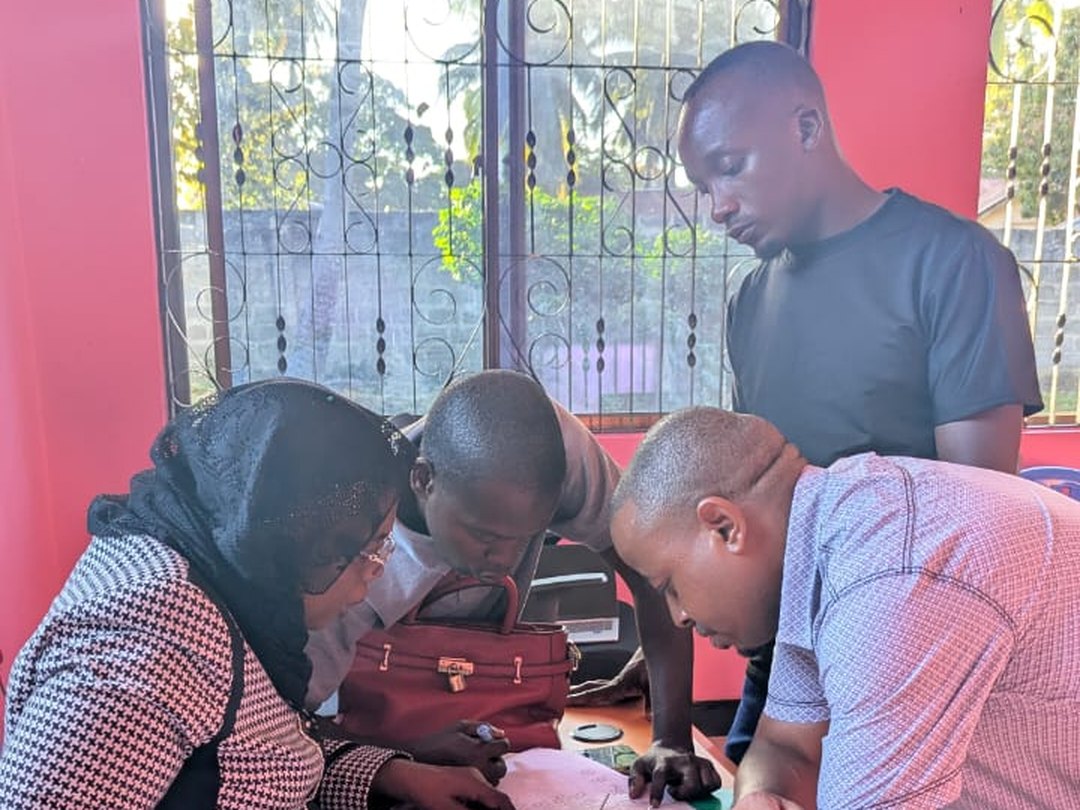
Led by the Executive Director, Ms. Asina Shenduli, the BAKAID Headquarters team joined the Kizazi Hodari team to verify OVC client files one by one, making sure every record is complete, correct and matches what is reported.
At BAKAID Tanzania, every child and every household we serve counts, and so does every record that describes them. Accurate data is how we know that services have truly reached the people who need them, and how we account to our partners, the Government and the communities we work with. That is why we work to make sure no data is lost and no record is left unchecked.
In a recent data quality exercise, the BAKAID Headquarters team, led by the Executive Director, Ms. Asina Shenduli, joined the Kizazi Hodari project team to review OVC client files one by one, making sure that the information recorded in each file is complete, correct and consistent with what has been reported.
What is “dot-to-dot” verification?
“Dot-to-dot” verification means following each piece of information along its whole path, from the moment it is first written down to the moment it appears in a report. For every client file, the team checks that:
- the client’s details and enrolment information are complete and correct;
- the services recorded in the file match the services reported in registers and summary forms;
- dates, referrals and follow-up visits are documented and consistent;
- the figures reported upwards can be traced back to an actual file and an actual child or household.
Where a gap or a mismatch is found, it is noted, discussed with the responsible staff and corrected, so that the final reports reflect what really happened in the community.
Why it matters
Behind every OVC client file is a child or caregiver who depends on timely and appropriate support, whether that is health care, HIV services, education support, protection or household economic strengthening. When records are accurate, case workers can follow up the right households at the right time, no child falls through the cracks, and programme decisions are based on evidence rather than estimates.
Good data also builds trust. Partners and the Government can rely on BAKAID’s reports because the numbers can be verified, file by file.
Leadership that leads by example
Having the Executive Director and the Headquarters team sitting side by side with project staff, going through files together, sends a clear message: data quality is everyone’s responsibility, from the field to the top of the organisation. These joint reviews also give staff the chance to learn from one another, share practical tips and agree on how records should be kept.
BAKAID Tanzania will continue to carry out regular data quality checks across its projects, because reliable information is the foundation of quality services for every child and family we serve.